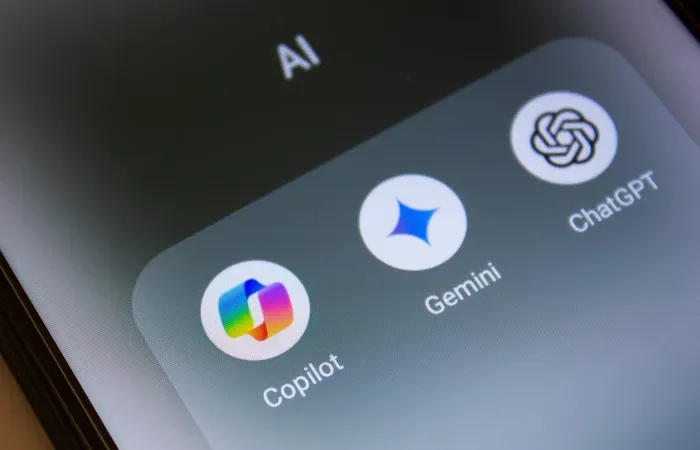
Can AI really replace human creativity? This question has become increasingly common as artificial intelligence continues to evolve at a pace few expected. From generating images and writing texts to composing music and editing videos, AI systems are now deeply involved in processes that were once considered uniquely human.
Can AI really replace human creativity?
At first glance, it may feel like the answer is yes. After all, machines can now produce content in seconds that once took humans hours or days. But when we look beyond the surface, creativity reveals layers that technology has not truly reached.
What Creativity Actually Means
Creativity is often confused with novelty. Producing something new, however, is only part of the story. Human creativity is deeply connected to intention, emotion, memory, and cultural experience.
When a person creates, they are not simply combining existing elements. They are interpreting reality through personal perspective. Their work carries traces of lived experience, internal conflict, curiosity, and meaning. Creativity emerges from context — social, emotional, and historical — not just from structure.
This distinction becomes essential when comparing human creativity to artificial intelligence.
As impressive as these tools may be, asking whether can AI really replace human creativity requires looking beyond efficiency. Creativity is not only about producing something new, but about intention, emotional context, and the human experience behind each idea.
How Artificial Intelligence Generates “Creative” Content
Artificial intelligence does not imagine, feel, or intend. It operates through pattern recognition.
AI systems are trained on massive datasets containing texts, images, music, and other forms of content created by humans. From this data, the system learns how elements tend to relate to one another. When prompted, it predicts what comes next based on probability, not understanding.
This means AI does not create in the human sense. It reconstructs. Its outputs resemble creativity because they reflect patterns extracted from past human work. What appears original is, in reality, a statistical recombination of what already exists.
That distinction explains both the power and the limitation of AI-generated content.
Why AI Feels Creative — and Why That’s Misleading
AI feels creative because it produces results quickly, fluently, and at scale. It can generate hundreds of variations, experiment with styles, and adapt outputs instantly. This efficiency often gives the impression of intelligence and imagination.
However, speed is not creativity. Creativity is not measured by volume or velocity, but by meaning and intention.
AI does not understand why something matters. It does not experience doubt, insight, or emotional resonance. It does not choose to break rules for expressive reasons. It simply follows learned structures.
The result may look creative, but the process is fundamentally mechanical.
The Limits of Artificial Creativity
There are aspects of creativity that remain uniquely human. Emotional depth, personal memory, ethical judgment, and cultural awareness cannot be reduced to data patterns.
A human artist may intentionally create something uncomfortable, ambiguous, or deeply personal. They may contradict expectations or challenge norms based on lived experience. AI cannot make such decisions consciously, because it has no internal world.
Without intention, creativity loses its core. What remains is simulation.
Will AI Replace Creative Jobs?
This question reflects a real concern, but it is often framed incorrectly. AI is not replacing creativity itself — it is changing how creative work is done.
Many repetitive or technical tasks are being automated. Drafting, editing, resizing, formatting, and generating variations are increasingly handled by machines. This shift reduces barriers and increases productivity.
At the same time, skills like vision, storytelling, taste, interpretation, and critical judgment are becoming more valuable. People who understand how to guide, evaluate, and contextualize AI-generated content are not being replaced. They are being elevated.
The creative role is evolving, not disappearing.
The Future Is Not AI Versus Humans
The most realistic future is collaboration.
Artificial intelligence works best as an extension of human intention. It accelerates execution, expands possibilities, and reduces friction. Humans provide direction, meaning, and responsibility.
When creativity is guided by human values and amplified by technology, the result is not replacement — it is transformation.
AI becomes a tool. Creativity remains human.
Why Human Creativity Still Matters
People connect with stories, ideas, and art because they reflect shared experience. Creativity allows humans to make sense of the world, to communicate identity, and to explore meaning.
Technology can assist that process, but it cannot replace the need for authentic expression. Creativity is not only about producing content. It is about understanding, questioning, and connecting.
Those qualities cannot be automated.
So, Can AI Really Replace Human Creativity?
The answer is no.
So, can AI really replace human creativity in its full sense? While machines can replicate patterns and assist creative workflows, human creativity remains deeply tied to consciousness, meaning, and lived experience — elements no algorithm truly possesses.
Artificial intelligence can simulate creative outputs, assist creative workflows, and reshape creative industries. But it cannot replace the emotional, experiential, and intentional foundation of human creativity.
The future of creativity belongs not to machines alone, but to humans who know how to use technology without losing what makes creativity meaningful in the first place.